


Smiles of a Summer Night and the films of Ingmar Bergman

An important, often overlooked work in the great Swedish director Ingmar Bergman’s filmography, Smiles of a Summer Night has proven influential and enduring over the past 71 years.
Amongst many re-interpretations and homages, it was remade by Woody Allen (a noted Bergman disciple) in 1982 as A Midsummer Night’s Sex Comedy, and by Stephen Sondheim in 1973 as A Little Night Music, a successful stage musical. It’s the Bergman film often cited as giving the lie to the unfair label pinned on the director as a forbidding art-house master of “Swedish doom and gloom”.
Released in 1955, Smiles of a Summer Night does exactly what it says on the tin – it’s a light, frothy, beautifully performed rom-com, advertised at the time as “starring four of Sweden’s most beautiful women.” Set in Sweden around the turn of the twentieth century, the basic plot is very simple, involving couples who switch partners on a summer’s night.

Bergman is currently out of fashion and his films are not shown as regularly as they once were, which I find surprising. I first discovered Bergman’s films by seeking out double and triple bills, trekking around London’s repertory houses such as The Gate Bloomsbury (now Curzon Renoir), The Everyman in Hampstead or The Academy in Oxford Street (sadly long gone, it’s now an M&S).
These films are often intense, occasionally challenging, supremely well acted, beautifully photographed, and wonderfully entertaining. The epitome of European art house cinema during the peak period (mid-1950s and 1960s), Bergman produced a series of masterpieces in almost unbroken succession that cemented his reputation as a great director. This run includes Summer with Monika (1952) Sawdust and Tinsel (1953), Wild Strawberries (1957), The Seventh Seal (1957), The Virgin Spring (1961), and Persona (1967).

Like any other area of culture, where works of art reward your time and attention, you perhaps need to work a little harder on some of Bergman’s films – for example the so-called ‘crisis of faith’ trilogy (Through A Glass Darkly (1961), Winter Light (1963), and The Silence (1963). The rewards are worth the effort though!
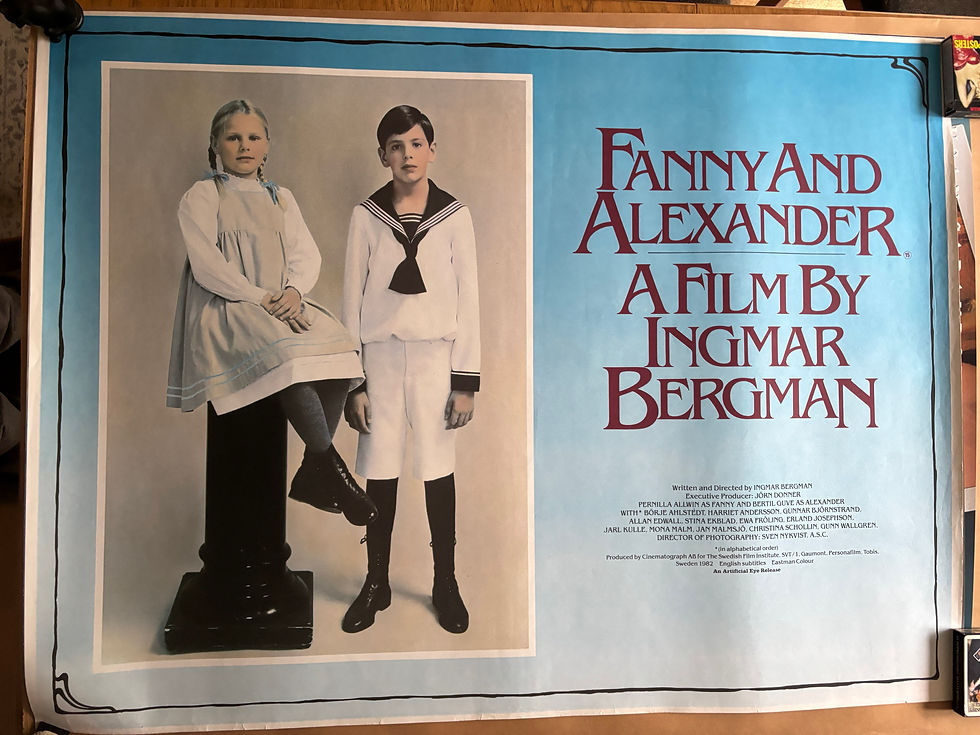
Although he did make a couple of later films, essentially Bergman’s varied and consistently fascinating career as a filmmaker culminated in the mighty Fanny and Alexander (1982). A summation and virtual compendium of Bergman’s life, career and themes, it’s one of the greatest films ever made about childhood, family and the theatrical life.


Comments